Our extensive product range covers over 2,000 vehicle models

For buyers around the world, 3D car floor mats aren't just some basic accessories anymore. They've become pretty sophisticated protection systems designed to match today's modern interiors. You really notice their value in everyday details—things like raised sidewalls, laser-cut precise contours, secure clips, and channels that help steer water away from your shoes. A good, well-made mat should sit flush around the pedals, and it needs to hold up against mud, coffee spills, sand, and the mess of repeated loading and unloading.
David MacNeil, the guy who started WeatherTech, once summed it up perfectly: “The best protection is the protection that fits.” That idea still holds true when you're comparing suppliers from different markets. You have to look at things like the quality of materials, how well they control odors, the precision of their molds, the quality of packaging, and how reliable their delivery is. And don’t forget about warranty support! Sometimes, a lower price can hide weak edges or inconsistent sizing—things that can really become problems down the line.
This guide is all about the top 10 suppliers of 3D car floor mats for global buyers. We’ve considered their manufacturing experience, whether they offer customization, their testing standards, and how dependable they are when it comes to exporting. Some suppliers are great at covering high-end vehicles, while others are more focused on large private-label orders with flexible production schedules. But keep in mind—just because a product page looks super impressive doesn’t mean the actual samples will be perfect. Sometimes you might find thin backing, loose fasteners, or uneven stitching upon closer inspection. That’s where careful evaluation really starts.
You might’ve come across phrases like Floor Mats Car. It might sound a bit awkward, but honestly, that’s how some buyers search online. Picking the right supplier shouldn’t rely on keywords alone; it really pays to consider real-world driving conditions. Things like your vehicle’s climate, the model, your cleaning habits, and the kind of debris you encounter on local roads all play a role in how well the mats perform. The best candidates are those who combine solid engineering with honest, reliable communication. It’s often those small details—like how well they fit or how they handle tough conditions—that ultimately decide the long-term value of your purchase.
OICA reported 93.5 million motor vehicles produced worldwide in 2023, up from about 85.0 million in 2022. This figure covers cars and commercial vehicles, not floor mats alone. Still, it shows the scale of the potential replacement and accessory market. Each vehicle has a cabin, but its floor shape, seat layout, and fastening points vary by model. A mat that looks close may still leave gaps near the pedals or door sill. Fit matters.
For global buyers comparing 3D car floor mats suppliers, production volume is a useful starting point, not a demand forecast. OICA’s production statistics count vehicles built, while they do not measure accessory purchases, replacement cycles, or regional preferences. Buyers should therefore check supplier coverage by vehicle model and year, material specifications, dimensional testing, and sample-fit procedures. A raised edge can help contain water and grit; it cannot compensate for poor fit. Small details matter.
The scale is impressive, but the data has limits. Production is concentrated across regions, and vehicle mix differs from market to market. A supplier’s catalogue may not match local demand as neatly as expected. Reviewing actual fit samples and defect records is less glamorous than comparing headline capacity, yet often more useful. OICA’s 2023 production data provides context, not a guarantee of sales.
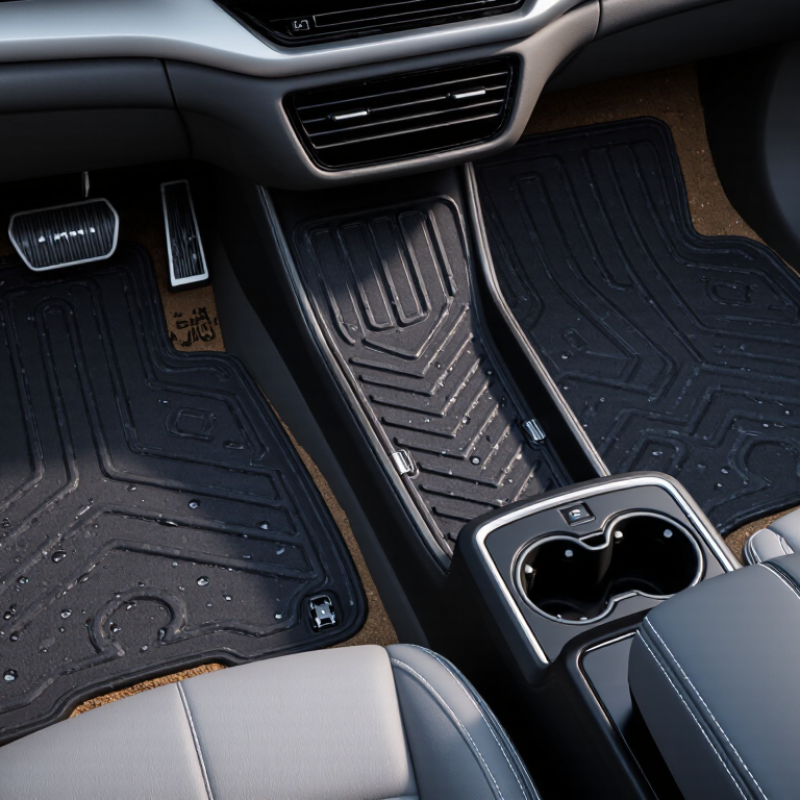
For global buyers, 3D fit is more than a neat contour. A mat should follow the footwell, clear seat rails, and stay away from pedals. Check fit in the actual vehicle, not only against a digital template. A small gap near the tunnel can collect grit and moisture. NHTSA’s floor-mat safety guidance warns that mats must not interfere with accelerator or brake operation. During inspection, press each pedal through its full travel and check for contact. It is a simple test, but easy to overlook.
Full coverage should protect the driver’s heel area and the footwell sides without folding beneath the pedals. Raised edges help contain water, sand, and melted snow; look for consistent height around corners, not just a tall edge in product photos.
S&P Global Mobility reported that the average age of U.S. light vehicles reached 12.6 years in 2024, a useful reminder that replacement parts must withstand long service lives. For Car Floor Mats, buyers can ask suppliers for vehicle-specific fitment records, material specifications, and repeatable dimensional checks. Measurements matter. Still, a perfect drawing cannot reveal every real-world wrinkle, so sample installation remains worth the effort.
When comparing suppliers of 3D car floor mats, ask for material data, not just claims such as “premium” or “all-weather.” TPU is often flexible and abrasion-resistant, while TPE can offer a lighter, low-odor option. Their performance still depends on the specific formulation and thickness. Request sample mats and test them in the vehicle, especially around the pedals and raised edges.
PVC can be economical and easy to shape, but buyers should check flexibility in cold conditions and odor after unpacking. Rubber provides a firm, grippy feel and can handle muddy shoes, though some blends are heavier. No material wins every test. Ask suppliers for weight per set, thickness, temperature test conditions, and cleaning guidance. Compare these figures across equivalent designs; otherwise, a thicker sample may look better without proving longer service life. Fit matters, too. A small gap near a seat rail can collect grit. For Floor Mats In Car projects, request fitment samples for the exact vehicle model and production year. I would also ask how the supplier checks dimensional consistency between batches. That detail is easy to overlook, and it can be.
Indicative supplier and material benchmarks for buyer screening. Figures are planning ranges, not verified quotations or guarantees from specific manufacturers; confirm specifications, testing, compliance, and lead times directly with each supplier.
| Supplier Profile | Typical Material | Indicative Material Density | Temperature Performance* | Customization Capability | Indicative MOQ | Indicative Production Lead Time | Buyer Checks |
|---|---|---|---|---|---|---|---|
| Molded thermoplastic mat specialist | TPE | Typically 0.9–1.3 g/cm³, grade-dependent | Grade-dependent; request tested service-temperature range | Vehicle-specific 3D scanning, raised edges, textured surfaces | Often 100–500 sets per design | About 30–60 days for new tooling and first production | Fit samples, odor, slip resistance, cold-flexibility testing |
| Flexible TPU mat producer | TPU | Commonly around 1.1–1.3 g/cm³, grade-dependent | Varies by TPU chemistry and grade; verify with test data | Detailed contours, flexible lips, custom color and surface texture | Often 200–1,000 sets per design | About 35–65 days for new tooling and first production | Abrasion, hydrolysis, odor, and dimensional stability |
| High-volume PVC mat converter | PVC | Typically about 1.2–1.5 g/cm³, formulation-dependent | Formulation-dependent; check low-temperature flexibility | Printed or embossed finishes, trim-to-fit and vehicle-specific shapes | Often 300–1,500 sets per design | About 25–50 days for repeat orders; tooling adds time | Plasticizer and restricted-substance documentation, odor, cold cracking |
| Compression-molded rubber mat maker | Natural or synthetic rubber compounds | Often about 1.1–1.6 g/cm³, compound-dependent | Compound-specific; request hot and cold performance results | Molded channels, anti-slip backing, logo-free custom geometry | Often 300–1,000 sets per design | About 30–60 days for new tooling and first production | Rubber odor, abrasion, aging, and surface staining |
| Multi-material automotive trim supplier | TPE or TPU | Depends on selected resin grade | Must be confirmed for the exact compound and finished mat | Vehicle-specific tooling, multi-piece sets, packaging options | Often 200–1,000 sets per design | About 30–60 days for initial orders | Material traceability, fitment validation, production consistency |
| Custom-tooling injection molder | TPE or TPU | Grade-specific; request resin technical data sheet | Grade-specific; supplier should provide validated limits | Complex vehicle contours, integrated clips, model-specific tooling | Often 500–2,000 sets per design | About 40–75 days for tooling and initial production | Tool ownership, sample approval, dimensional inspection plan |
| PVC sheet-forming and finishing supplier | PVC | Formulation-dependent; confirm finished-product specification | Formulation-dependent; test for intended climate and use | Cut-to-shape, layered construction, surface embossing | Often 200–1,000 sets per design | About 20–45 days for repeat or standard constructions | Edge finish, dimensional tolerance, chemical compliance documents |
| Recycled-compound mat producer | Recycled rubber or thermoplastic blend | Varies widely with recycled content and blend composition | Must be established by compound-specific testing | Commonly molded patterns, limited color options, custom dimensions | Often 300–1,500 sets per design | About 30–60 days, depending on compound availability | Recycled-content evidence, batch consistency, odor and contaminants |
| Private-label export-oriented mat supplier | TPE, PVC, or rubber options | Depends on selected material and construction | Confirm performance for the selected SKU and destination climate | Packaging, labeling, color selection, selected vehicle fitments | Often 100–500 sets for standard designs | About 20–45 days for stocked or repeat products | Export packing, carton dimensions, origin and compliance paperwork |
| Specialist for commercial-vehicle and fleet mats | Rubber, TPE, or PVC | Construction- and material-dependent | Request testing under expected fleet operating conditions | Larger formats, reinforced areas, model-specific commercial fitments | Often 100–500 sets per design | About 25–55 days for repeat orders; custom molds take longer | Load durability, attachment security, coverage, cleaning resistance |
*Temperature performance is intentionally shown as grade-dependent: no single operating range applies universally to TPU, TPE, PVC, or rubber mats. Ask shortlisted suppliers for the exact material grade, test method, finished-product results, vehicle-fitment samples, and destination-market compliance documents. MOQs and lead times vary with tooling, order size, and shipping terms.
For global buyers, a certificate is a starting point, not proof that every mat is consistent. ISO’s Survey 2022 recorded 1,265,216 ISO 9001 certificates across 189 countries and economies. That scale shows how widely quality systems are used; it does not guarantee precise fit or durable edges. Ask suppliers for current certificates, production-site scope, and inspection records. For Car Floor Mats 5d, request fit checks against actual vehicle models, plus measurements of raised edges and heel-pad thickness. Small details matter.
IATF 16949 focuses on automotive quality management, including traceability and defect control. Ask how a supplier tracks a resin batch from incoming pellets to finished mats. REACH and RoHS address chemical substance concerns, but they are not interchangeable certifications. Request recent, material-specific test reports, including the tested color and backing—not just a generic product sheet. ECHA’s Candidate List is updated as substances of very high concern are identified, so document reviews need dates. A paperwork gap is easy to miss.
A practical audit should connect documents to the goods in the box. Check that labels, batch numbers, and test samples match. I would also verify what the reports do not cover; that is often the uncomfortable part. A certificate can expire, and a supplier’s material can change. Recheck before production runs.
A useful ranking of 3D car floor mat suppliers should look beyond catalog size. Production capacity affects whether a supplier can handle seasonal orders without delaying repeat shipments. Ask for monthly output ranges and typical lead times, then compare those figures with your forecast. Numbers need context. A large factory may still prioritize other product lines.
Minimum order quantity matters for importers testing a new market. Low MOQs reduce inventory risk, while higher thresholds may bring better unit pricing. Check whether the quoted MOQ applies per vehicle model, color, or material. These details can change the real cost of a trial order. Get them in writing.
Tooling support is another practical divider. Confirm who pays for molds, how design changes are priced, and whether sample mats fit the vehicle floor without shifting. A precise fit matters. Request measurements, edge-height details, and photos of a sample installed in the target vehicle. Export reach should be judged through documented shipping experience, packaging standards, and clear communication about transit schedules. Port access alone tells little. Supplier rankings are never perfectly objective: one buyer may value flexible MOQs, while another needs steady high-volume output. Compare the criteria against your own order plan, and leave room for a factory audit or sample review before committing.
How to read this chart: Capacity, MOQ, tooling, and export reach are key comparison criteria for 3D car floor mat suppliers. The equal percentages show a proposed evaluation framework, not verified supplier data or a ranked comparison. Confirm supplier-specific figures directly before sourcing.
When evaluating 5d Car Floor Mats suppliers, request a written production schedule with sampling, tooling, and inspection dates separated. A low unit price means little if fitment samples arrive late. The World Bank’s 2023 Logistics Performance Index reports an average 44-day journey from exporter’s warehouse to importer’s warehouse, with about 60% of that time spent at sea or in ports. This is a broad logistics benchmark, not a promised delivery time for floor mats. Ask suppliers to quote production and transit separately, then check recent shipment records and the named shipping route. Small delays add up.
QC should match the product’s real use. Request dimensional checks against vehicle-specific templates, edge-height measurements, odor screening, and repeated fitting in a sample vehicle. Ask for dated inspection photos and the acceptable defect rate in writing. McKinsey’s 2020 supply-chain survey found that 93% of respondents planned to increase supply-chain resilience; it supports checking backup capacity, not assuming every supplier has it. Warranty terms should state coverage length, exclusions, claim evidence, and replacement freight responsibility. Calculate landed cost with tooling, packaging, freight, insurance, duties, and defect allowances included. Get it in writing. One weak point remains: buyers often approve samples before testing them after heat exposure or repeated cleaning. That can be an expensive oversight.
All-weather TPE car floor mats offer practical protection for drivers facing rain, dust, mud, and everyday spills. Made from high-quality thermoplastic elastomer, these mats are designed to remain durable through changing conditions and temperatures up to 122°F. Their resilient construction helps protect the vehicle’s carpeting from wear and mess, while a precise fit keeps the interior looking neat and comfortable.
Produced by trusted factory suppliers in China, these eco-conscious mats are made with non-toxic, odorless materials and are designed with family comfort in mind. Compared with traditional PVC options, TPE provides a durable alternative for drivers seeking dependable interior protection. The factory’s focus on quality and responsible materials makes these mats a practical upgrade for many vehicles, combining everyday functionality with a cleaner, more comfortable cabin.
About 93.5 million cars and commercial vehicles were produced worldwide. It shows market scale, not mat demand.
No. Floor shapes, seat layouts, and fastening points vary by model and year. Close is not always correct.
Poor fit may leave gaps near pedals or door sills. Water and grit can then reach the carpet.
Check vehicle coverage, material details, dimensions, fastening points, and sample-fit procedures. Ask for actual model samples.
No. Raised edges help contain water and grit, but they cannot correct incorrect dimensions.
No. Certificates show a quality system exists. They do not guarantee precise fit, durable edges, or every production batch.
Ask how resin batches move from incoming pellets to finished mats. Labels and batch numbers should match production records.
Request recent, material-specific reports covering the tested color and backing. Generic product sheets may be incomplete.
Check the certificate date, production-site scope, test coverage, and sample match. Documents can expire or become outdated.
Ask what the reports do not cover. That gap may matter more than impressive headline capacity.
This article presents a practical guide to 3d Car Floor Mats for global automotive buyers, beginning with the market scope and OICA’s reported 2023 global vehicle output of 93.5 million units. It explains how precise 3D fitting, complete floor coverage, raised edges, anti-slip performance, and easy cleaning define product quality. Buyers will also find a clear comparison of TPU, TPE, PVC, and rubber, focusing on durability, flexibility, odor, temperature resistance, recyclability, and cost.
The ranking of the top 10 suppliers is based on manufacturing capacity, minimum order quantities, tooling support, production flexibility, and export reach, without focusing on brand names. The article also outlines essential compliance considerations, including IATF 16949, ISO 9001, REACH, and RoHS. Finally, it provides a supplier due-diligence checklist covering lead times, dimensional and material testing, inspection procedures, warranty terms, packaging, shipping, duties, and total landed cost.