Walt
Linyi Walt International Trade Co., Ltd.
Our extensive product range covers over 2,000 vehicle models

Leave Your Message
Our extensive product range covers over 2,000 vehicle models
Global car owners rarely buy accessories for appearance alone. They want safer journeys, easier storage, cleaner cabins, and better daily comfort. Yet product quality, vehicle compatibility, climate, and installation standards vary widely between markets.
SEMA’s 2024 market research valued the U.S. specialty-equipment automotive aftermarket at approximately $52.3 billion in 2023. Grand View Research also identifies vehicle personalization and connected technologies as major market drivers. These figures show strong demand, but they do not guarantee a suitable purchase. A low-cost phone mount can loosen on rough roads. A floor mat can curl near the pedals. Small details matter.
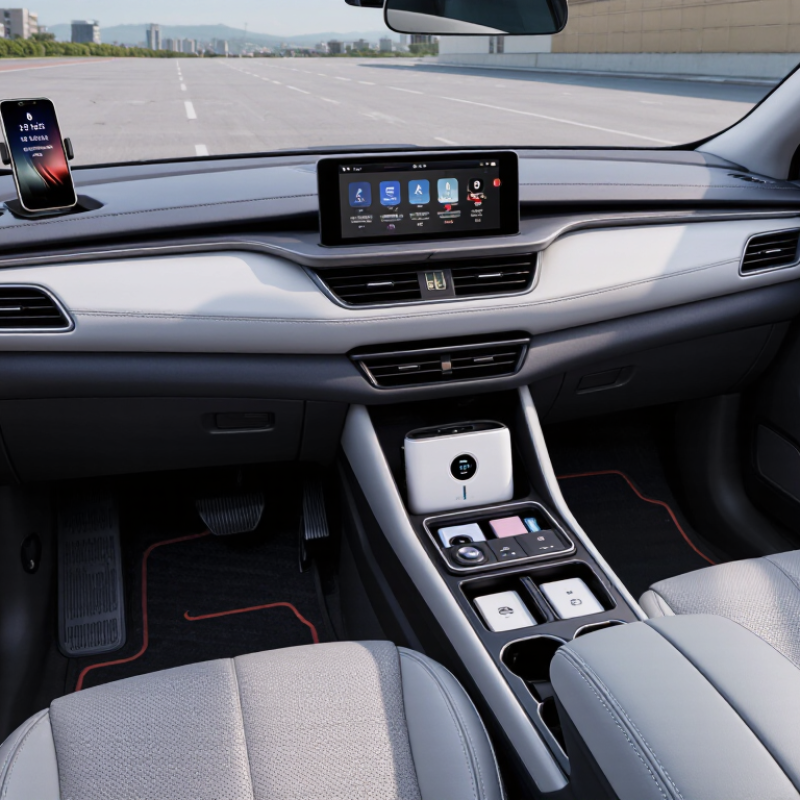
Mike Spagnola, President and CEO of SEMA, describes the specialty-equipment market through “passion, personalization, and performance.” That idea supports a practical buying approach. Buyers should check fitment data, material durability, warranty terms, user reviews, and installation requirements before paying. Car Interior Car Dashboard Accessories deserve extra attention because heat, sunlight, airbags, and dashboard surfaces create real safety considerations.
This guide offers ten buying tips for global customers. It considers regional driving habits, shipping conditions, voltage compatibility, and after-sales support. It also recognizes an uncomfortable truth: the most popular product is not always the best product. A perfect choice rarely exists. Careful comparison still beats impulse buying.
Reliable decisions begin with evidence. Look beyond attractive packaging, exaggerated claims, and vague “universal fit” labels. Choose Car Accessories that match the vehicle, the driver, and the road ahead.
A 12.6-year-old vehicle needs a different accessory strategy.
S&P Global Mobility reported that the average U.S. vehicle age reached 12.6 years in 2024. That figure changes how global buyers should define use cases. Older vehicles may need clearer visibility, easier phone charging, better cabin organization, or protection from harsh weather. Do not begin with appearance. Begin with the daily problem.
A commuter in a hot city may need a heat-resistant phone mount and a reliable sunshade. A rural driver may value a compact tire inflator, emergency lighting, and durable storage. Buyers in snowy regions should check temperature ratings, installation clearance, and local equipment rules. The International Energy Agency reported that global electric car sales exceeded 14 million in 2023, so accessory planning must also consider battery-powered vehicles, charging routines, and cable storage.
Fit matters more than packaging claims. Measure the dashboard, console, trunk, and available power ports before ordering. Check voltage compatibility and attachment methods. A universal product is not always universal. That is an easy mistake.
Independent testing can reduce uncertainty. The National Highway Traffic Safety Administration publishes vehicle safety guidance, while regional transport authorities may set different requirements for lighting, visibility, and windshield placement. Read the manual, inspect materials, and keep purchase records. I have learned that small gaps in fit can become daily frustrations, especially after months of heat, dust, and vibration.
| Tip | Buying Dimension | Verified Data or Standard | What Global Buyers Should Check | Practical Buying Action |
|---|---|---|---|---|
| 1 | Define the vehicle use case | 12.6 years was the average age of vehicles in operation in the United States in 2024. | Older vehicles may have different connectors, infotainment systems, battery conditions, and available diagnostic functions than newer vehicles. | Record the vehicle’s model year, body type, engine or powertrain, intended use, and driving environment before selecting an accessory. |
| 2 | Confirm electrical compatibility | Most passenger vehicles use a nominal 12-volt electrical system; many heavy commercial vehicles use 24 volts. | Nominal voltage does not guarantee compatibility. Charging-current limits, fuse ratings, polarity, and ignition-controlled power also matter. | Match the accessory to the vehicle voltage and verify the permitted current draw in the vehicle and accessory documentation. |
| 3 | Check connector and charging standards | USB Type-C is a connector standard, while USB Power Delivery is a separate power-negotiation standard. A USB-C port does not automatically provide high-power charging. | Charging performance depends on the vehicle port, cable, charger, and device working together. | Compare the required power in watts with the accessory output and confirm whether data transfer, charging, or both are required. |
| 4 | Match diagnostic coverage | OBD requirements vary by market. OBD was required on new light-duty vehicles sold in the United States from the 1996 model year; European EOBD implementation began later and differed by fuel type. | Connector presence does not mean every diagnostic parameter or test will be available. | Verify supported model years, protocols, languages, live-data functions, and regional coverage before purchasing a diagnostic tool. |
| 5 | Evaluate environmental protection | Under IEC 60529, IP67 indicates dust-tight protection and temporary immersion in water up to 1 metre for up to 30 minutes under specified test conditions. | IP ratings do not automatically cover impact resistance, chemicals, ultraviolet exposure, heat, or salt spray. | Choose an enclosure rating based on the installation location and request separate evidence for temperature, vibration, and corrosion performance. |
| 6 | Use climate-specific specifications | Vehicle accessories may face wide operating conditions, including freezing weather, high cabin temperatures, humidity, and direct solar heating. | Battery-powered and electronic products can lose performance in cold conditions and may require thermal protection in hot conditions. | Compare the stated operating-temperature range with the destination climate, storage conditions, and mounting location. |
| 7 | Verify tire and wheel data | Recommended tire pressure is vehicle-specific and is normally listed on the vehicle information placard or in the owner’s manual; it is not determined solely by the tire’s maximum pressure. | Incorrect pressure readings or unsuitable wheel fitment can affect handling, tire wear, and safety. | For inflators, gauges, and tire accessories, confirm pressure range, accuracy, valve compatibility, wheel diameter, bolt pattern, and load requirements. |
| 8 | Check safety and legal requirements | Lighting, window films, warning devices, radio equipment, and driver-assistance accessories can be regulated differently by country or jurisdiction. | A product legal in one market may be restricted in another, especially when it affects visibility, lighting color, radio transmission, or vehicle controls. | Review destination-market rules and required conformity markings before import, installation, or resale. |
| 9 | Measure installation space and load | Roof, cargo, seat, dashboard, and windshield mounting points have different dimensional, weight, and restraint requirements. | Interference with airbags, pedals, steering movement, mirrors, cameras, sensors, or emergency equipment can create a safety risk. | Measure the available space, mounting surface, cable route, and maximum supported load before ordering. |
| 10 | Compare total cost of ownership | Total ownership cost includes purchase price, shipping, customs duties, taxes, installation, replacement parts, software access, maintenance, and disposal. | Cross-border returns, regional plugs, language support, warranty limitations, and replacement availability can materially change the final cost. | Request a landed-cost estimate and confirm warranty coverage, spare-part availability, service process, and return conditions before purchase. |
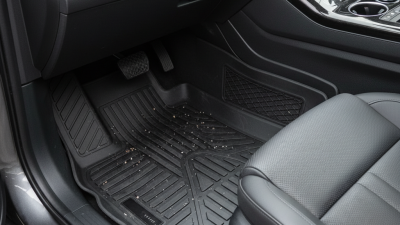
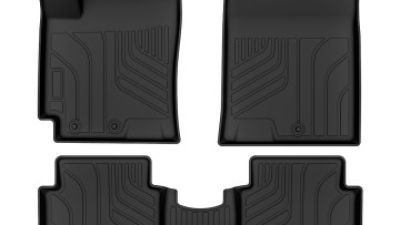
China-made 3D TPE car floor mats are engineered to deliver durable, flexible protection for every drive. Made from high-density thermoplastic elastomer, these mats combine excellent elasticity with a precise 3D fit that helps cover the vehicle floor, including raised edges and footwell areas. Their contoured design helps contain dust, mud, water, and everyday spills, keeping the original carpet cleaner and easier to maintain.
Built for demanding use, the material is wear-resistant and scratch-resistant, allowing the mats to handle frequent entry, heavy footwear, and daily cargo movement. Their flexible structure remains comfortable to handle while providing reliable support underfoot. Unlike ordinary mats that may crack or lose shape over time, high-quality TPE construction is designed to resist deformation, hardening, and breaking in both hot and cold conditions.
From summer heat and rain to winter moisture and freezing temperatures, these car floor mats maintain their resilience and protective performance. Easy to remove, clean, and reinstall, they are suitable for drivers seeking a practical interior accessory with long-lasting durability. Manufactured by an experienced China-based supplier, they can be produced to meet different vehicle specifications, fit requirements, and performance expectations.
Older vehicles may need clearer visibility, easier charging, cabin organization, or weather protection. Start with daily problems, not appearance. Looks can mislead.
Consider a heat-resistant phone mount and a reliable sunshade. Check dashboard temperatures and attachment strength. Heat exposes weak materials quickly.
Compact tire inflators, emergency lighting, and durable storage can help. Choose items that tolerate dust, vibration, and uneven roads. Keep them reachable.
Review temperature ratings, installation clearance, and local equipment requirements. Ice and snow can block lights, sensors, or moving parts. Small gaps matter.
Check charging routines, cable storage, connector types, voltage, and maximum current. Inspect cable paths near doors and moving panels. Charging spaces get crowded.
Check the complete vehicle identification number and model year. Similar vehicle names may hide different engines, body styles, or factory equipment. Photos are not enough.
Measure the dashboard, console, trunk, mounting points, and available clearance. Compare these measurements with the accessory’s exact dimensions. Measure twice.
Confirm the approved roof limit, including the accessory, brackets, and stored items. A strong-looking mount can still exceed that limit. I once forgot the brackets.
Confirm power rating, voltage, connector type, and maximum current. Determine whether the device draws power continuously. Unclear specifications deserve written confirmation.
Read the manual, inspect materials, and save specification screenshots. Independent testing may reduce uncertainty. I still recheck details; experience does not prevent every mistake.
Buying Car Accessories for international markets requires a structured, practical approach. Start by defining the vehicle’s use case, considering that the average U.S. vehicle age is about 12.6 years, which may affect fit, performance, and replacement needs. Safety should be verified through applicable requirements such as UN ECE R129, FMVSS, and official recall checks. Before ordering, confirm compatibility using the vehicle identification number, product dimensions, load limits, and electric-vehicle power ratings.
Global buyers should also compare manufacturing quality through ISO 9001 certification, suitable IP ratings, testing records, and clear warranty terms. Total cost calculations must include product pricing, VAT, duties, shipping, returns, insurance, and agreed Incoterms. Finally, test products before placing large orders. A 30-day validation period can help evaluate fit, heat resistance, vibration durability, installation ease, and everyday performance across different vehicles and climates. This process reduces unexpected costs and supports safer, more reliable purchasing decisions.