Walt
Linyi Walt International Trade Co., Ltd.
Our extensive product range covers over 2,000 vehicle models

Leave Your Message
Our extensive product range covers over 2,000 vehicle models
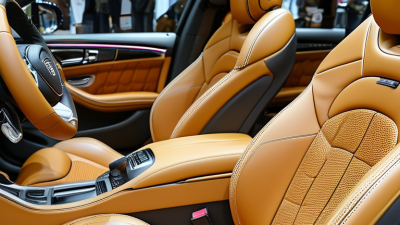
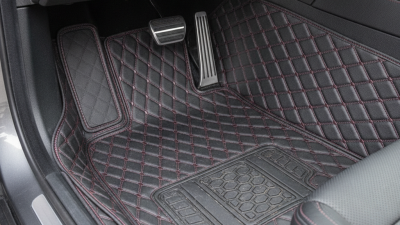
You know, by 2026, the market for premium vehicle interiors is shifting — it’s no longer just about looks. It’s actually becoming more practical. According to a report from Grand View Research on the global automotive floor mats scene, we’re looking at steady growth through 2030. The main drivers? More folks owning cars, replacing mats more often, and an increased desire for a comfy cabin. This stuff really matters if you’re comparing fancy Leather Car Mats across different climates, car models, or price ranges — it all influences your decision.
Also, S&P Global Mobility shared that in the U.S., the average age of vehicles on the road hit about 12.6 years in 2024. So, naturally, there’s a steady demand for replacements, especially for high-quality Leather Car Mats. But, listen, just looking good isn’t enough to judge quality. You gotta dig deeper — check if the fit is precise, how much edge coverage there is, if the heel pad is sturdy, stitching density, smell, and whether they’re slip-proof. Small details really count. For example, a raised sidewall can help keep rainwater and dust inside, and a textured surface might give you better grip daily. And about materials — honest labeling is key. Some mats are made with synthetic leather, PVC, or polyurethane instead of full-grain leather. That’s not necessarily bad, but if the info isn’t clear, it can shake your trust.
This guide compares some of the top 3D Leather Car Mats available worldwide. It looks at how they’re built, how easy they are to install, how much cleaning they need, packaging, warranties, and how transparent the suppliers are. ISO 9001 certification can help guarantee consistency, but let's be real — it doesn’t mean you’re getting the perfect mat. No such thing exists. Even attractive mats might trap dust near seat rails or need careful trimming, especially in unique car interiors. So, think of market reports as helpful guides, but don’t take them as gospel. Ultimately, fitting the vehicle properly, checking specifications, and long-term user reviews are what really matter when making your choice.
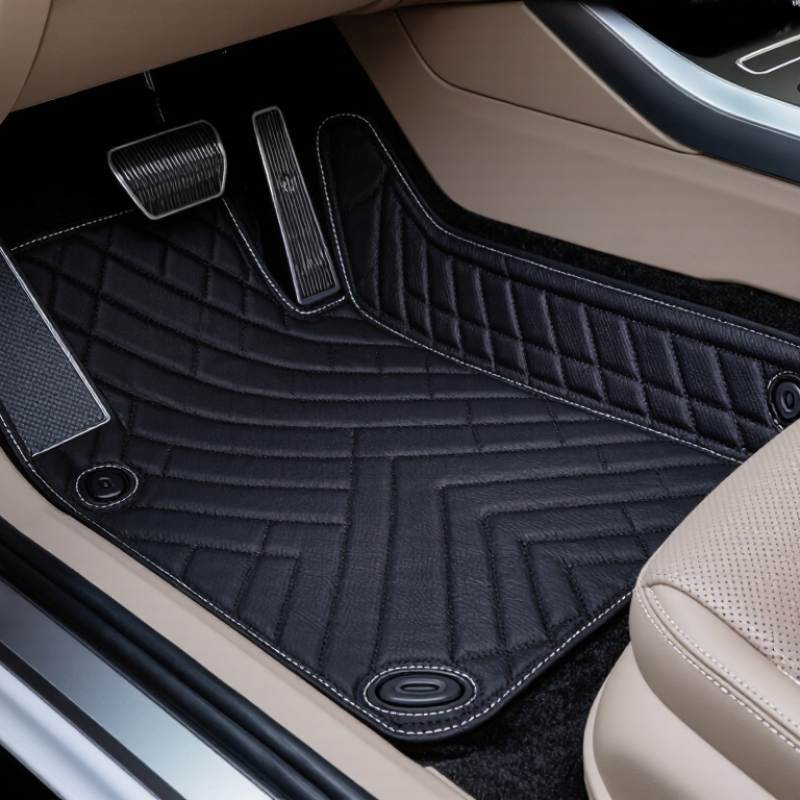
For global buyers, a 3D leather car mat is a fit-and-safety product, not merely an interior accessory. The 2023 WHO Global Status Report records about 1.19 million annual road deaths worldwide. That figure makes pedal clearance and secure retention worth serious inspection. Measure each footwell, including seat rails, pedals, door trim, and factory clips. A raised edge should contain water without touching the accelerator or brake. Test the mat while moving the seat through its full range. It sounds basic. Many listings skip it.
Material selection must match climate. Closed-cell polymer backing resists moisture, while surface leather or synthetic leather needs abrasion, UV, and hydrolysis testing. In hot regions, ask for odor and volatile-emission results. In cold regions, check flexibility below freezing. For coastal or snowy markets, inspect salt and drainage performance. The U.S. NHTSA warns that unsecured or incorrectly fitted floor mats can interfere with pedal operation. Compliance evidence should include applicable flammability testing, such as FMVSS 302 or ISO 3795, plus chemical documentation for the destination market.
A buyer should also verify stitching strength, edge binding, cleaning instructions, and traceable batch records. UNECE and national vehicle rules can differ, so one certificate rarely proves global suitability. I would not trust “universal fit” without vehicle-specific measurements. Even a well-designed 3D scan can miss a changed seat rail or trim panel. Request samples, installation photos, test reports, and a written retention check before placing a large order.
| Evaluation Dimension | Buyer Requirement | Practical Data or Benchmark | Recommended Verification | Priority for Global Buyers |
|---|---|---|---|---|
| Vehicle Fit | Model-specific fit for the exact vehicle generation, body style, seating layout, and floor configuration. | A single universal dimension is not reliable because floor contours, seat rails, center tunnels, and pedal layouts differ between vehicles. | Confirm make, model, model year, left- or right-hand drive, body style, and trim before ordering. Use a vehicle-specific CAD pattern or physical template. | Critical |
| 3D Coverage | Raised perimeter and shaped floor coverage to contain water, mud, snow, and spilled liquids. | Coverage should follow the actual footwell perimeter without obstructing pedals, seat movement, seat anchors, or access to factory controls. | Install the mat in the vehicle and check the accelerator, brake, clutch, seat-slide range, door sill, and floor fasteners through their complete operating range. | Critical |
| Anti-Slip Retention | The mat must remain fixed during normal driving and must not slide toward the pedals. | Use the vehicle’s original retention points where available. Retention features should not interfere with seat tracks or wiring beneath the seats. | Check fastener engagement, backing strength, underside grip, and pedal clearance after installation. Do not rely only on weight or surface friction. | Critical |
| Pedal Safety | No possibility of accelerator, brake, or clutch pedal interference. | The driver-side mat must not curl, lift, overlap the pedal arms, or contact the accelerator during full pedal travel. | Perform a static full-travel pedal test and a final visual inspection after the mat has been installed and secured. | Critical |
| Top Surface | A leather-look or genuine-leather surface that is easy to clean and resistant to everyday abrasion. | Common constructions include coated leather, synthetic leather such as PVC or polyurethane, and multilayer composite surfaces. “Leather” should be defined by material composition. | Request a material declaration identifying leather, polymer coating, backing, adhesives, dyes, and surface treatments by layer. | High |
| Water and Stain Resistance | Protection against rainwater, snow, mud, beverages, road salt, and common interior contamination. | A sealed or coated top layer and bonded edges reduce liquid penetration; no textile or coated surface should be assumed permanently waterproof without test evidence. | Review liquid-resistance, stain-resistance, edge-sealing, and repeated-cleaning test results using the intended detergents. | High |
| Hot-Climate Performance | Resistance to softening, warping, cracking, odor, and color change in hot vehicle interiors. | A parked vehicle can experience substantially higher interior temperatures than outdoor ambient air; dark surfaces and direct solar exposure increase thermal stress. | Request heat-aging, dimensional-stability, colorfastness, and odor results at defined temperatures and exposure times. | High |
| Cold-Climate Performance | Flexibility and dimensional stability in freezing conditions, including snow and ice exposure. | Low temperatures can make polymer layers and coatings less flexible and may expose weak seams or brittle fasteners. | Review low-temperature flexibility, cold-crack, seam-strength, and repeated freeze-thaw test data. | High |
| Abrasion and Tear Resistance | Durability under repeated heel contact, sand, footwear friction, folding, and removal for cleaning. | The heel area and edge binding generally experience the highest localized wear and should receive additional reinforcement. | Request abrasion, flexing, tear-strength, seam-strength, and edge-bond testing for the complete finished mat. | High |
| Fire Safety | Materials should satisfy the applicable motor-vehicle interior flammability requirements in the destination market. | FMVSS 302 is a widely referenced U.S. motor-vehicle interior flammability test for specified interior materials; other jurisdictions may apply different rules. | Obtain a current third-party test report for the finished material construction, not only for an individual raw-material layer. | Critical |
| Chemical Compliance | Control restricted substances, heavy metals, plasticizers, dyes, solvents, and hazardous residues. | For EU sales, applicable REACH obligations may include substance restrictions and communication requirements. Requirements depend on material, article status, and market. | Request a bill of materials, supplier declarations, and laboratory screening for relevant restricted substances in the target market. | Critical |
| VOC and Odor | Low odor and controlled volatile emissions for use in a closed passenger compartment. | Odor and VOC performance can vary with adhesives, plasticizers, backing foams, dyes, and heat history; no single global limit applies to every market. | Specify the test method, conditioning period, sampling temperature, and acceptance criteria rather than accepting an unqualified “low VOC” claim. | High |
| Cleaning and Maintenance | Simple removal, washing, drying, and reinstallation without damage to the surface or retention system. | Cleaning instructions should identify compatible water temperature, detergent type, brushing limits, drying method, and prohibited chemicals. | Conduct repeated cleaning cycles and inspect color, coating adhesion, seams, backing, odor, and fit after drying. | Medium-High |
| Water Drainage and Containment | Containment of liquid while allowing safe removal and emptying without wetting the vehicle carpet. | Raised walls and corner geometry should retain liquid during normal vehicle movement; drainage holes should not release water onto the carpet unless intentionally designed for that purpose. | Test with measured water volume on level and inclined footwell surfaces, then inspect the carpet, seams, corners, and edges. | High |
| Material Transparency | Clear distinction between genuine leather, coated leather, synthetic leather, PVC, polyurethane, rubber, textile, and foam layers. | Material names can be interpreted differently across markets; the composition and percentage of each layer should be documented. | Require a signed material specification, layer diagram, safety data where applicable, and batch-level traceability. | High |
| Packaging and Logistics | Protection against deformation, moisture, contamination, and creasing during international transport and storage. | Deep 3D mats may deform if tightly folded or stored under load for long periods; packaging should support the finished shape where necessary. | Define carton dimensions, packed weight, moisture protection, stacking limits, recovery time after unpacking, and acceptable cosmetic tolerances. | Medium-High |
| Market Documentation | Destination-specific product information and evidence for customs, retail, and safety review. | Documentation may include commercial invoice, packing list, country-of-origin information, material composition, care instructions, test reports, and applicable declarations. | Check the import, labeling, chemical, consumer-product, and vehicle-interior requirements of each destination before shipment. | Critical |
A precise fit protects pedal clearance and keeps the mat from shifting. Measure the footwell, seat rails, door trim, clips, and center tunnel. Universal fit is not enough.
Check the driver’s seat in forward, middle, and rear positions. Record floor length, sidewall clearance, corner curves, and hidden contact points. Small errors matter.
No. They provide useful reference data, but they do not show every carpet curve or clip position. Recheck the mold after the first fitting.
Keep the front edge flat and clear of the accelerator and brake pedals. Test heel movement with ordinary shoes. The seat should move through its full range.
Look for vehicle-specific anchors and a high-friction underside. Test the mat during entry, exit, cleaning, and repeated movement. It should stay still.
Moisture-resistant backing suits wet conditions. Surface materials should resist abrasion, ultraviolet exposure, and hydrolysis. Cold markets need flexibility below freezing.
Request finished-mat flammability results, material thickness, conditioning details, and measured burn rates. Ask for odor, emissions, abrasion, and dimensional-stability data when relevant. Vague claims are weak.
No. Regional vehicle rules and chemical requirements can differ. Verify destination-market documentation, traceable batches, cleaning instructions, and installation photographs.
Check drainage, salt resistance, stitching, edge binding, and moisture underneath. Dust and grit may change performance. New, dry samples are not the whole story.
Request samples and a written retention check. Install the prototype in the real vehicle, then document any correction. Digital models can still hide a two-millimeter mistake.
Choosing the best 3d Leather Car Mats in 2026 requires more than evaluating appearance and price. Global buyers should first verify vehicle compatibility through SAE J1100 reference dimensions, checking length, width, contours, pedal clearance, and attachment points. A well-designed 3D edge structure should provide measurable coverage in millimeters, protecting the front, rear, and raised floor areas from water, mud, dust, and spills. Material selection is equally important, with leather quality assessed through ISO 2419 and ISO 11640 criteria for strength, finish, and color transfer.
Safety and long-term performance are also essential. Mats should resist movement during driving and meet the FMVSS 302 flammability requirement of no more than 102 mm/min burning rate. Buyers should also confirm REACH SVHC disclosure when substances reach or exceed 0.1%. For durability, ISO 11640 rubbing tests and DIN 53516 abrasion testing help evaluate resistance to repeated friction. This framework supports informed purchasing across different climates, vehicle types, and international markets.